Showing posts with label Great Grandparents. Show all posts

Saturday, 20 August 2016

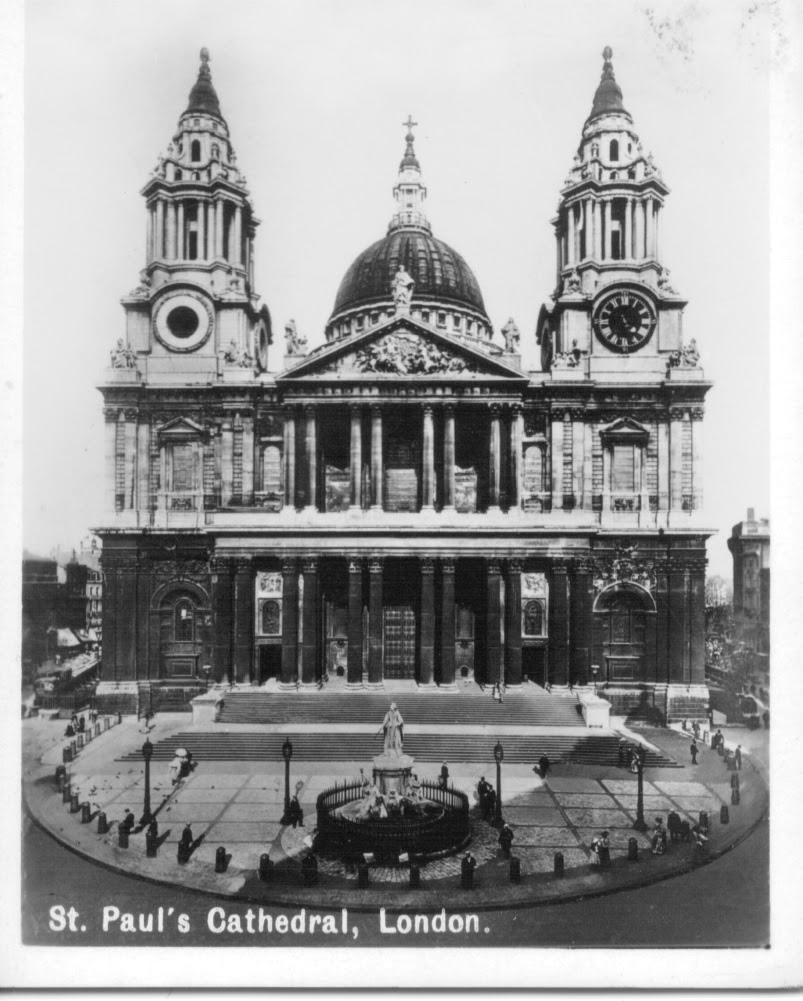
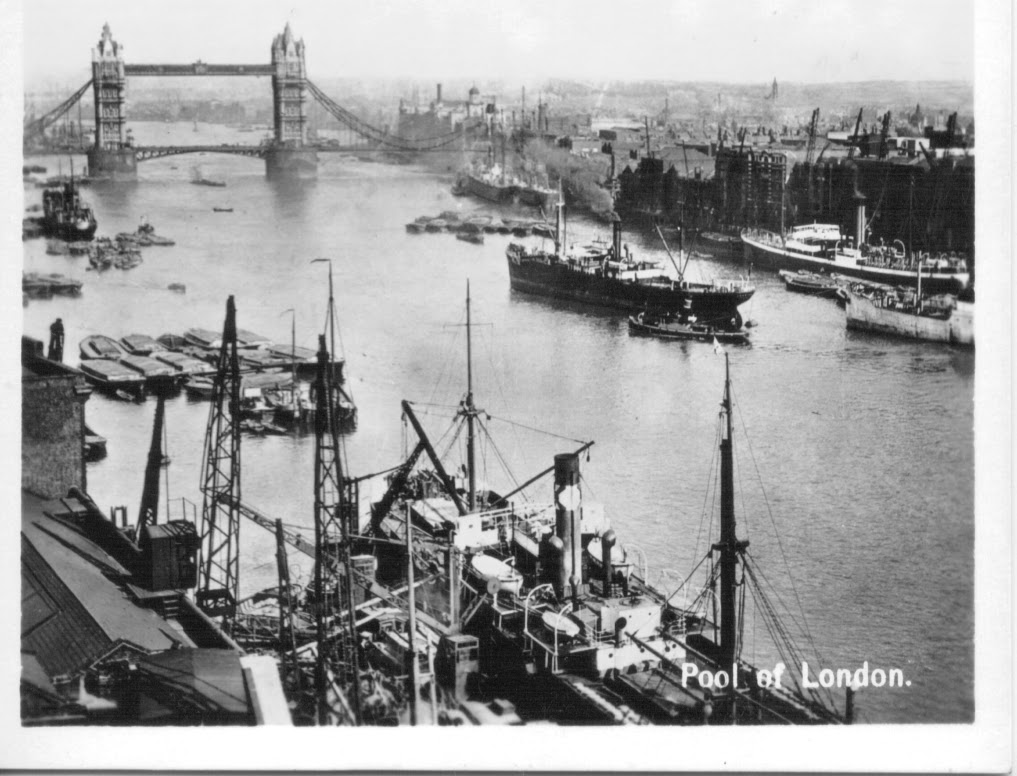
Looking through old family history stuff I've just found these old photos of London.  The 12 photos came in a tiny envelope marked thus:

In order to try and see the photos more clearly I loaded them onto our computer. I came to the conclusion that they must have been taken some time in the 1930s as there were no photos showing the results of the bombing which took place during World War II.  

Then I remembered that my great grandfather (Arthur Briggs) did take my Mum on a trip to London, which would have been when she was a teenager.  This must have been before the War as Arthur himself died in 1944.

Considering they're tourist photos of landmarks, which rarely change a great deal, they're quite interesting, so I've reproduced them here.


*although teenagers as such didn't really exist until at least the 1950s, One day they were children and the next they were 'grown up'.

Saturday, 16 August 2014

I'm very excited (well it doesn't take much!) as have found some more ancestors: ones which I'd given up hope of ever finding.  

We didn't know very much about my grandmother, Bunty's, family.  All she said was that she lost contact with them when they emigrated to Australia in about 1920.  And that all her photos had been lost when they moved down to Cornwall in 1925......


She said that her mother had married again and subsequently had a son, Frank (after whom Bunty named her second son, my uncle Frank);  my grandmother also said that her mother was called Florence, the same as her - not a great deal to go on.  


But, thanks to a very helpful relative, I've now been able to trace her mother's birth certificate (a different name from on her marriage certificate, thus the confusion).


Using free bmd and also Ancestry at the library we've been able to find out about Bunty's grandmother.  We didn't realise that she had a daughter out of wedlock (Bunty's mother) and we also didn't realise that she subsequently married and had a daughter.  Unfortunately the daughter died in the 1960s with no issue so we can't find out any more information than these bare bones at present:


Annie Greenslade (Bunty’s grandmother)

Born: 4 December 1863 at 2 Clarendon Cottages, Hornsey
Parents: James Greenslade, Clerk at the Metropolitan Board of Works and Annie (nee Laman) 

Married: 20 June 1895 Hornsey: (Edmonton 3a/487)
Charles Henry Edward West, and  Annie Eliza Greenslade, 
Witnesses: Marian Emma Greenslade and Charles West.

Children
  1. Florence Gasper Greenslade born 1879, ond 2a/567, out of wedlock (Bunty’s mother) No mention on 1911 census.  (this is my grandmother's mother, who I was told was  called Florence Violet Gasper, so no wonder I couldn't trace it)
  2. Mabel Marian West, b 26.4.1897, Edmonton, London.


1871 Census:  6 Willow Walk, Hornsey: with parents

1881 Census:  7 Vernon Terrace, Long Lane, Barnet, Finchley: with parents.
AND
1881 Census: (probably) 78 Blenheim Crescent, Kensington
Florence Greenslade:, age 1 yr, illegitimate, no mention of mother.

1891 Census: 9b Marine Parade, Brighton (lodging house)
Harriott West, wife, m, 70, b Bermondsey (prob d later that year)
Annie E Greenslade, visitor, s, 27, b Hornsey
Jemima West, visitor, 10, b Hackney

1901 Census:  Tranmere, Muswell Road, Wood Geen
Chas H E West, h, m, 32, surveyor lane agent, employer, b shoreditch; Annie E, 37, b hornsey, wife; 
Mabel M, 3, daughter, b hornsey

1911 Census: 33 Creighton Avenue, Muswell Hill, 10 rooms, two servants.
Charles Henry Edward West, head, 42, m 15 yrs. Surveyor and property agent, employer, b Hackney rd NE; 
Annie Eliza West, wife, 47, 1 ch born, 1 alive (!);
Mabel Marian West, daughter, 13, school, b Crouch End.

May have died 1958 Hastings, aged 94?  
Charles may have died Battle, 1948 aged 79

Mabel’s death (Found on Ancestry June 2015)
Mabel Marian West, spinster late of ‘Combewood’ St Helens Park Road, Hastings, Sussex, died there on 29 May 1966 (estate about £4,300). 
The kin of the above named are requested to apply to the Treasury Solicitor (BV), 35 Old Queen Street, Westminster, London SWl.  T 7 D Ext 17.7.1967; Crt mg 6.9.1967; Cit lg 31.10.1967
Daughter of Charles Henry Edward West ... surveyor and annie eliza west was Greenslade.
Born 26.4.1897 at 77 Cecile Park Couch End, Hornsey
Reg father same add .... Edmonton J/189 3a/210
Died as she domiciled in Eng. Admson (save and except settlement land)
10.11.1967 to ... £4,357.

(Mabel died aged 69 according to free bmd)


Going back to Annie's parents I've found:

James Greenslade 

Born: 1831?; Parents: James Greenslade ?
Married:  1862  Annie Laman (prob died 1917 Barnet)
Children:
Annie b 1863
James b 1866
Marion E b 1870

Alice E b 1872
Died: probably 1912 Barnet
   
1871 Census:  6 Willow Walk, Hornsey
James Greenslade, 40, Clerk to the Board of Works, Annie, 39;
Annie E, 7; James L, 5; Marion E, 1;
Edward C Laman, 71, retired butcher (father in law)

1881 Census:  7 Vernon Terrace, Long Lane, Barnet, Finchley
James, 50, Clerk Metropolitan Board of Works; Annie, 49;
Annie, 17; James L, 15; Marion, 11; Alice, 9.

1891 Census: yet to be found

1901 Census: Stanhope House, Finchley.
James, 70, retired clerk, London CC; Annie, 69.
Marion E, 31; Alice, 29.

1911 Census: Stanhope House, King Street, E Finchley
James, 79, A clerk under London City Council; Annie, 79;
Marion, 41.
4 children born, 4 survived.


Wife: Annie Laman 
Born: 1831
Parents: Edward Claridge Laman and Margaret Calvert
Died: prob died 1917 Barnet


Sunday, 10 July 2011

SMALE - Family Tree

My family tree

Since this was uploaded, we've found some more on the Gasper side.  The person who we've called Florence Violet Gasper was born Florence Gasper Greenslade.  I sent off for her birth certificate and her mother was given Annie.

When Florence died in 1962 she stated that her parents were Thomas Greenslade and Mary Gasper - but was this for respectability and difficult to prove wrong from over 10,000 miles away in England?  (For more information about the Greenslade side, see link on right hand side here)

Wednesday, 6 July 2011

Arthur Briggs (1866 - 1944) My Great Grandfather

Arthur Briggs

Born: 16.4.1866 Heckmondwyke
Parents: John Briggs and Ann Bradshaw
Married:
(1)    20.12.1890 (or 6.4.1890?) Richmond, Victoria, Australia to Minnie Ann(e) Temple
(2)    4.4.1929 The Parish Church, Scarborough (9d/791) Mabel Sutherland. At the time Arthur was at 53 Aberdeen Walk (father John Brigs, decd, Engineer) and Mabel was at 10 Dean Road (father John Sutherland, decd, cooper).

Children: Hilda Mary b 20.11.1891 Paramatta Australia (b 38 Chapel Street, City of Graham, Bourke, Australia (d 9.10/1974)

1871 Census:
1881 Census  Cemetry Road, Birstall, living with parents, app painter.
1891 Census presumably in Australia.
Returned from New South Wales, Australia by 1895 (see letter from sister Rosa)
1901 Census: Living 64 Castle Road, Scarborough
Arthur Briggs, 34, Master Painter, employed; Minnie A Briggs, 37, Hilda, 9.
1911 Census: Scarborough. Arthur; Minnie Ann; Hilda Mary.

Councillor before WWI.
1929 53 Aberdeen Walk, Scarborough.
19/9/1933 - lived at 25 Columbus Ravine, Scarborough.
about 1936 bought Westover Lodge, 8 Westover Road, Scarborough (1885 owned by the Rooks), Sunshine Museum in the garden. 
Owned a lot of property in Scarborough.
Used to cycle as didn’t trust himself to drive a car, cycled til about 72 years old.
Swam in sea every day.

Died: 17.5.1944, 9 Westover RoadScarborough, house agent. Coronary Thrombosis myocardial degeneration and double mitral disease, diabetes Mellitis.


Minnie Ann Temple

Born: 20.12.1863 (or amj?) Hartlepool, (10a/129)
Parents: John Temple and Mary Jane Catley, The Catley family owned a lot of property in Scarbro'.
1871 Census: ?
1881 Census: 58 Eastborough, Scarborough, living with parents.

Died: 1927 (Scarbro) 9d/601 jfm. Pneumonia.
(I have copy of letter from Rosa Cobb to sister Minnie Briggs, 1895.)

Westover Lodge
There was also Sunshine Castle at the side of the road (Westover Road) and this belonged to Dr
Rooke‟s house and it was where he make his mixtures and pills. Earlier though the well laid out
gardens had been open to the public and ladies and gentlemen would visit on a balmy evening and
stroll through them looking at the varied and interesting flowers.
This castle was demolished in the 1970s and with it another wonderful part of Scarborough‟s
history.
It is still an on-going thing trying to find the date of the house. We know it was there before the
railways arrived in 1845 as the land then ran all the way down to the Valley and the railway
company bought the land off the owners. One day it will all come to light and the mystery will be solved. (http://www.scarborough-heritage.org/resources/Commarch/ANECDOTES%20Richard%20Percy.pdf)

Monday, 4 July 2011

Florence Violet Gasper

Florence Gasper Greenslade b 1879

Birth certificate
Born: 19.10.1879 at Queen Charlotte's Hospital, Marylebone, London. 
(Mother: Annie Greenslade, Ladysmaid, living at 27 Bolton Road, Notting Hill.  No father.

Married: 10 March 1906, The Parish Church, Hendon, Middx. 
Francis William Adams, 25, Bachelor, Coachman, residence: 6 Burroughs Gardens. Father: Alfred Adams, Gardener.
Marriage Certificate
Florence Violet Gasper, 24 Spinster, no rank/profession, residence: 2 Burroughs Gardens. No father.  
Witnessed by A Adams and G Fowler.

Children
Violet Florence, b 2.4.1898, Hackney.
Frank, b 1906/7 (Possible: “Frank Francis Adams, b 12.7.1906 Kensington, see Australian records)

1881 Census: Possibly living at 78 Blenheim Crescent, Kensington, age 1 yr, illegitimate, no mention of mother. (http://home2.btconnect.com/ladbrokeassoc/streets/blenheimcrescent/blenheimcrescent.pdf)

1891 Census: find
1901 Census: find

1911 Census:  St Pancras:
Francis William Adams, b 1880 and Florence Adams b 1881,
also Francis Alfred b 1907, probably their son. Florence Violet Gasper, 13;

(According to VF (my grandmother)her mother went to Australia about 1920 with Violet's step father and their son, and she lost contact.  Her mother and stepfather wanted my grandmother to move over to Australia with them, but my grandma said her place was here with her husband.)

2012: my cousin Ian has unearthed lots more information. It has told us much more but, as is usual with family history, has introduced even more questions ....

Frank Adams (new husband - FW), Florence Greenslade Adams (my grandmother's mother - FG) and Frank Alfred Adams (their son - FA) emigrated to Australia between February 1920 and 1924.

1924:
82 Bunting Street, Richmond, Melbourne: Florence G and Francis W  (no Frank A (son))

1937:
102 Gilbert Road, Melbourne: mother and son: FG & FA.
However, father FW is at 28 Robeson St.

1942:  102 Gilbert Rd,
Melbourne: FW, FG and FA.

FA: enlisted Canberra, Australia, 1939 – 1948, next of Kin Florence Adams,

1954: 28 Robeson St:  FW, FW (no longer a 'motorman' (an engineer?)) and FA (no longer a carpenter).

1962: My greatgrandmother, 
FG died (Her father is listed at Tho Greenslade and mother Mary Gasper).


1963: 28 Robeson Street: FW & FA

1965: FW died.

1980: FA living at
28 Robeson St.

1983: FA died.


The following info came from my Grandmother - VF Smale:

MRS GREENSLADE (my greatgrandmother perhaps)
6' tall, kept guest house and had riding stables, Oakleigh Gardens, Monmouth Road, Bayswater, London.
Actors in guest house. (Was she at Hendon?) (the 6' tall is strange as my grandmother was under 5' herself).


I've found this excellent site re migration into Australia: http://familyhistoryresearch.com.au/courses/AustImmigration/ImmAustralia.htm

Saturday, 2 July 2011

William Joseph Smale (1861 - 1920). My G Grandfather

Known as Joseph


Born: 19.1.1861
Parents: JHH Smale and Mary Ann Waddon.
Married: 11.6.1883, Parish ChurchPortsea Island, to Eliza Morey
Children:  (perhaps others)
Alice May, b/d 1885 possible daughter  Psea
Blanche Jenny, b. 1893, Portsea Island
Dorothy Kathleen, b 1895 Portsea; 
John Henry Hodgson, b 14.2.1898 Alverstoke. (my paternal grandfather)

1861 Census: Living with parents, aged 3 months
1871 Census: Not yet found.
1881 Census: 43 Bloomfield House, Portsmouth: Living with parents.

1891 census 10 Leonard Street, Portsea St Mary’s, Portsmouth.
William Smale, 30, Guild Clerk Conservative Association; Eliza Smale, wife, 32. 


1901 census living at 29 C... (commercial?) rd, 
William J Smale, Fish Merchant, employed on own a/c at home; Eliza Smale, 42;
Blanch J, scholar, 8; John HH, scholar, 3. 
Also 1901 Census:  Dorothy Kathleen Smale, 5, visitor with John T Askell, 50, Factory Engine Driver, b Jersey,  and Sarah Askell, 54, b London at Elmdene Villa, ? (fish?) Road, Erith, St John’s ChKent.


1911 CensusPortsmouth
William Joseph; Eliza; 
Blanche Jenny; Dorothy Kathleen; John HH.
Photo of him with others – recruiting committee during WWI

Sec Central Division Portsmouth Union Association - Lord Beresford, Sir Hedworth Meux and Major Kayser into Parliament.  
1920 25 Monmouth Road North End, Portsmouth/Southsea.

Apparently went to St Thomas School of Medicine and Dentistry, got in with bad crowd, boozing etc. Report non-attendance for a whole term. Father not prepared to pour good money after bad, withdrew funding. So he did his medical training but did he practice?

Died: 7.12.1920, 55 Monmouth Road, North End, Portsmouth & Mid Southsea. Political Agent. 

ELIZA MOREY
Born: 1857 
Parents: James Morey (b about 1823) and Elizabeth (Williams?) b about 1829 (m prob 1846 Alverstoke).

1861 Census: 55 Cumberland St, Portsea. 
James, 38, Waterman; Elizabeth, 32, staymaker;
Elizabeth, 14; Jane, 12; Harriet, 5; Eliza, 4; (all b Portsea)

1871 Census: 52 Harbour Street, Portsea. 
James, 47, waterman, grocer, maltster; Elizabeth A 42;
Jane, 22, seamstress; Harriet, 16; Eliza, 13;   Frank T Lamb, 1, grandson.


1881 Census: there was an Eliza Morey working as grocer’s assistant with the Chivertons, Carrisbrook Road, Newport, IOW.


On husband's death went to live with Dorothy her daughter in Dawlish.

Died: 1933, Dawlish?


Through this site I have found Harriet's descendent, who told me that Harriet married John Lampard in 1874, sons: James (1875); John (1877); William (1880); Alfred (1883); Harriet (1887) and Arthur (1891).

Sir Hedworth Meux GCB KCVO, formerly Hedworth Lambton (5 July 1856 - 20 September 1929) was an English naval officer famous for bringing help to the British forces in the Siege of Ladysmith.   He became Admiral of the Fleet during the First World War. 
Constituencies
  1. Portsmouth January 15, 1916 - December 14, 1918

Alternative names

  1. Hon. Hedworth Lambton 1856 - 1911

Admiral of the Fleet


SIR HEDWORTH MEUX, MP (1914-18)


Admiral Sir Hedworth Meux
Courtesy of
Portsmouth City Museum


Sir Hedworth Meux entered parliament as Unionist MP for Portsmouth in a bye-election in 1914, the seat having become vacant when Lord Charles Beresford was elevated to the peerage as Baron Beresford. Meux was popular in the House of Commons and several times spoke vigorously on naval subjects, but he was not really interested in parliamentary work, and retired at the 1918 general election.

Behind this somewhat bland record of his time as Member of Parliament for
Portsmouth lay a far more interesting story. For a start, his given surname was not Meux.

Hedworth Lambton was born in
London on 5 July 1856, the third son of George Frederick D'Arcy Lambton, second earl of Durham (1828–1879), and his wife, Lady Beatrix Frances (d. 21 Jan 1871). He was educated at Cheam School and entered the Britannia as a cadet in 1870. He went to sea in December 1871, sailing in the frigate Endymion, of the channel squadron, and later in the flagship Agincourt, under Sir Beauchamp Seymour. From 1876 to March 1879 he served as sub-lieutenant in the flagship Alexandra, in the Mediterranean under Sir Geoffrey Hornby. In 1880, as flag lieutenant to his old chief Sir Beauchamp Seymour he was present at the bombardment of Alexandria (11 July 1882). In July 1886 he returned to the Mediterranean in command of the sloop Dolphin, and in February 1888 he was appointed to command the royal yacht Osborne, a post he held until he was promoted captain in 1889. From 1890 to 1892 he was flag captain to Charles Hotham in the Warspite on the Pacific station.


Sir Hedworth Lambton

From 1894 until 1897 Lambton was naval private secretary to Earl Spencer. In this important office Lambton's judgement on senior officers' appointments was well regarded though he made few friends amongst the officers with whom he dealt through the lack of consideration which he showed them, although he was far junior to most of them in rank and to all of them in age.

In 1897 Lambton went to the China station in command of the large protected cruiser Powerful with her sister ship, the Terrible (commanded by Captain Scott), the largest warship of her day and on their voyage home in October 1899 he was diverted to Durban, at a critical time early in the South African War. On his way he called at
Mauritius, and on his own initiative embarked the 2nd battalion, South Yorkshire regiment. Sir George White, commanding at Ladysmith, had been sending urgent messages for more powerful guns. Captain Percy Scott, in the Terrible, which had arrived at the Cape on its way to replace the Powerful on the China station, improvised field-carriages for naval guns, and with four long 12-pounders and two 4.7 inch guns Lambton landed with a naval brigade and arrived at Ladysmith on 30 October, just in time to prevent its surrender to the besieging Boers. The naval guns, though short of ammunition, countered the Boer artillery throughout the siege, for which the naval brigade gained much press coverage and praise. Lambton was created CB, and on the arrival of the Powerful in England was welcomed with great popular enthusiasm.


During the Boer War, the plight of the British Army had made headline news back in England and the defence of Ladysmith had made a particular impression on Valerie Susie Meux the widow of Sir Henry Brent Meux, third baronet, a brewer, of Theobald's Park, Waltham Cross. On hearing of the landing of the naval guns for the defence of Ladysmith, she had ordered, at her own expense, six naval 12-pounders on travelling carriages to be made at Elswick and sent to Lord Roberts in South Africa. They were known as the Elswick battery and though of limited use were much appreciated by the army.

On his return to
England, Lambton had called on Lady Meux to describe the work of her guns at Ladysmith, and to praise her patriotic action in sending similar guns to the front. Touched by this tribute, Lady Meux, after making many wills, decided to make Lambton her heir on the sole condition that he changed his name to Meux. She died in 1910 and Lambton changed his name by royal licence in September 1911 and inherited Theobald's Park, residence of Lord Burghley in the 16th Century.

After leaving parliament he devoted much of the remaining part of his life to horse breeding and died on
20 September 1929 at Danebury, an estate which he had bought near Stockbridge, Hampshire. His will was proved at £910,465 gross, with net personalty £734,265. He had no children, and he left his fortune, subject to his widow's interest, to her grandson Sir Ian Hedworth John Little Gilmour, third baronet (b. 1926), later a Conservative MP and cabinet minister.


     Admiral Hon. Sir Hedworth Meux was born on 5 July 1856.2 He was the son of George Frederick D'Arcy Lambton, 2nd Earl of Durham and Lady Beatrix Frances Hamilton.1 He married Hon. Mildred Cecilia Harriet Sturt, daughter of Henry Gerard Sturt, 1st Baron Alington of Crichel and Lady Augusta Bingham, on 18 April 1910 at St. Paul's Church, Knightsbridge, London, England.3 He died on 20 September 1929 at age 73, without issue.1
     Admiral Hon. Sir Hedworth Meux was baptised with the name of Hedworth Lambton.
2 He fought in the Egyptian Campaign in 1882.2 He was Pruivate Secretary to the successive First Lords of the Admiralty between 1894 and 1897.2 He fought in the Siege of Ladysmith between 1899 and 1900, where he commanded the Naval Brigade.2 He was commanding officer of the the Royal Yacht Victoria and Albert between 1901 and 1902.2 He held the office of Extra Equerry to HM King Edward VII between 1902 and 1910.2 He was second in command of the Channel Fleet between 1903 and 1904.2 He was commanding officer of the 3rd Cruiser Squadron between 1904 and 1906.2 He was Commander-in-Chief of the China Squadron between 1908 and 1910.2 He was decorated with the award of Grand Officer, Order of St. Maurice of Italy.2 He was decorated with the award of Grand Officer, Legion of Honour.2 He was Keeper of the Crown Jewels at HM King George V's coronation in 1910.2 He was decorated with the award of Knight, Order of Dannebrog of Denmark.2 He held the office of Extra Equerry to HM King George V in 1910.2 He was invested as a Knight Grand Cross, Order of the Bath (G.C.B.).1 On 2 September 1911 his name was legally changed to Hedworth Meux by Royal Licence.2 He was Commander-in-Chief of the Portsmouth between 1912 and 1916.2 He held the office of Member of Parliament (M.P.) for Portsmouth between 1916 and 1918.2 He was invested as a Knight Commander, Royal Victorian Order (K.C.V.O.).2 He gained the rank of Admiral of the Fleet.1


Lord Charles Beresford

Charles William de la Poer Beresford, 1st Baron Beresford
10 February 18466 September 1919
Allegiance
Flag of the United KingdomUnited Kingdom
Service/branch
Years of service
1859-1911
Rank
Commands held

Battles/wars
Awards
Charles William de la Poer Beresford, 1st Baron Beresford GCB GCVO (February 10, 1846September 6, 1919), known as Lord Charles Beresford until 1916, was a British Admiral and Member of Parliament.
Beresford was the second son of John Beresford, 4th Marquess of Waterford, thus despite his honorary title, as second son was still eligible to enter the House of Commons. He combined the two careers of the navy and a member of parliament, making a reputation as a hero in battle and champion of the navy in the House of Commons. He was a well-known and popular figure who courted publicity, widely known to the British public as "Charlie B". He was considered by many to be a personification of John Bull, indeed was normally accompanied by his trademark, a bulldog.
His later career was marked by a longstanding dispute with Admiral of the Fleet Sir John Fisher, over reforms championed by Fisher introducing new technology and sweeping away traditional practices. Fisher, slightly senior to Beresford and more successful, became a barrier to Beresford's rise to the highest office in the navy. Beresford rose to occupy the most senior sea commands, the Mediterranean and Channel fleets, but failed in his ambition to become First Sea Lord.
Beresford had a reputation for kindness to his men, saying 'Any smart action performed by an officer or man should be appreciated publically by signal...Everyone is gratefull for appreciation'.[1] At 46 and as captain, he took part in inter-ship rowing competitions. His family traced their ancestry to Englishmen who had invaded Ireland with James I and stayed to rule. Their estate covered 100,000 acres at Curraghmore near Waterford in South East Ireland. The family enjoyed hunting, to the extent that his uncle was killed in a riding accident, his brother was crippled in another, and he himself managed ten broken bones at various times. There was a family tradition of service in the armed forces, his brother William winning a VC in the Zulu Wars. Charles was captivated by the sight of the Channel Fleet at age twelve.[2]

Naval and Parliament careers

Beresford joined the Royal Navy in 1859 aged 13, and started his training as a cadet at the naval training academy HMS Britannia. His first appointment was to the flagship of the Mediterranean fleet, HMS Marlborough. On HMS Galatea, commanded by Queen Victoria's son the Duke of Edinburgh, he toured the world, witnessed executions in Japan and got tattooed. [3]
He entered Parliament as a Conservative in 1874, representing County Waterford and retained his seat until 1880. Some difficulties arose with the Lords of the Admiralty, who objected to a junior officer debating the navy publically in the House of Commons. Beresford's parliamentary career was saved by the intervention of the Prime Minister, Benjamin Disraeli, who feared the loss of the seat to an opposition party, should Beresford be forced to resign.[4] Whilst an MP he continued to serve in the navy, becoming a commander in 1875.
In 1874 Beresford was one of thirty two aides chosen to accompany the Prince of Wales on a tour of India. Victoria objected, on the grounds of his bad reputation, but he remained at the Prince's insistence. The tour was a lively mixture of social engagements and animal hunts. The Prince insisted on dressing for dinner, even in the jungle, but allowed the concession of cutting off the tails off their evening coats, creating the dinner jacket.[5] He was aide-de-camp to the Prince of Wales, later Edward VII, from 1875 until 1876.
During his service under Edward VII, he became involved in an affair with Daisy Greville, Countess of Warwick (i.e., Francis Brooke), with whom Edward VII was also involved romantically. The affair strained his friendship with Edward VII, even though Edward himself was married to Alexandra of Denmark.[6]

 Involvement in Egypt and Sudan

From 1878 until 1881 Beresford was second in command of the royal yacht HMY Osborne. He was captain of the gunboat HMS Condor in 1882 when it took part in the bombardment of Alexandria during the Egyptian war of 1882 and won admiration amongst the British public for taking his ship inshore to bombard the Egyptian batteries at close range.
In 1884 and 1885 Beresford joined the staff of the Gordon Relief Expedition under Garnet Wolseley, along with the Naval Brigade and a Gardner machinegun, to which Beresford was much attracted.

Re-election to Parliament, promotion to Rear Admiral

In 1885 he was again elected to Parliament, this time as MP for Marylebone East, and re-elected at the 1886 general election. Beresford constantly pushed for greater expenditure on the navy, resigning his seat in protest on this issue in 1888. The Naval Expenditure Act of 1889, which increased naval spending, was passed partly as a result of public pressure resulting from this action. From 1889 until 1893 he was the captain of HMS Undaunted, which was part of the Mediterranean Fleet.

In 1898 Beresford was promoted to rear-admiral and again entered Parliament, this time representing York. He retained this seat until 1900, although he spent much of his time in China representing the Associated Chambers of Commerce, and from 1900 onwards was second in command of the Mediterranean Fleet. A dislike steadily developed between Beresford and Sir John Fisher who was then commanding that fleet. Shortly after his arrival, Beresford took a company of men ashore and used them as stand-ins for ships to practice manoeuvring and assembling a fleet. Fisher noticed the display and publically sent a signal demanding to know why Beresford had landed his men without permission. Lord Charles resented his superior as a social climber from unknown origins, while Fisher was jealous of Beresford's inherited wealth and social position.[7]
He returned to Parliament in 1902, this time for Woolwich, but resigned in 1903 when he was promoted to admiral and appointed chief of the Channel Fleet. He was in command of the Mediterranean Fleet from 1905 until 1907. Beatty, then a captain serving under Beresford, commented that Beresford's command of the fleet was characterised by 'rigid training and discouragement of initiative'. Beresford aspired to reach the navy's most senior post, first sea lord, but the position was held by Fisher, who was widely respected. Mandatory retirement at 65 would have led to Fisher departing in 1906, but promotion for Fisher to Admiral of the fleet also brought with it an extension of retirement age to 70. Beresford himself would reach retirement at 65 in 1911, unless he too could achieve the same promotion. As this seemed unlikely, the only possibility was if Fisher resigned, or was obliged to. Beresford set about organising a campaign criticising his handling of the navy and its reforms. [8]
Beresford transferred to command of the Channel fleet from 1907-1909. He was complimented as having 'no superior as a seaman', but his time in charge was described as 'principally a processional career around the ports of Britain...I do not recall that any serious problems of war were either attempted or solved [but] Lord Charles received deputations, addressed crowded meetings in his honour, and became freeman of innumerable cities'. [9] It was noted that his personality seemed to have changed for the worse, and historians have suggested that he might have suffered a minor stroke at some time before 1907.[10]
By 1909, Beresford had managed to gain sufficient support for an official enquiry to be opened by the Prime Minister into Fisher's conduct at the admiralty. The enquiry exhonerated Fisher, but sufficient damage was done to his reputation that he was obliged to retire slightly early, in 1910, in anticipation of a forthcoming general election.
After his term with the Channel Fleet finished in 1909, Beresford returned to Parliament at the January 1910 general election, representing Portsmouth. In 1912, it was proposed by George V, who knew Beresford, that he might be promoted Admiral of the Fleet, but it fell to Beatty, now naval secretary to First Lord Winston Churchill to point out that others would be more deserving of such a promotion. Beresford had been somewhat left behind by the technological innovations and changes in the navy during the last years of his service as an admiral. It is likely that he would have performed poorly had he continued as an admiral into world war one. However, at times during his career he supported proposals to reform the fleet signal book, which might have made it more suitable to wartime use, and had championed reforms in fire control, where understanding of how best to use the new big guns on Fisher's dreadnought ships lagged behind their ability to hit at long ranges.[11]
Fisher was replaced as First sea Lord by Sir Francis Bridgeman. Bridgman proved to be unsatisfactory, and Churchill resolved to replace him with Second Sea Lord, Prince Louis of Battenberg. Beresford questioned the matter of Bridgman's resignation, officially said to be for reasons of ill health, by challenging Churchill in the House of Commons. Churchill responded, saying of Beresford that 'since I became first lord of the admiralty...within a fortnight he made a speech in which he said I had betrayed the navy...and ever since he has been going about the country pouring out charges of espionage, favouritism, blackmail, fraud, and inefficiency... The noble Lord nourishes many bitter animosities on naval matters'. The House of Commons supported Churchill, considering that Beresford's attack was a continuation of his dispute with Fisher, who was now acting privately as advisor to Churchill.[12]
On the eve of World War I, First lord Churchill and First Sea Lord, Prince Louis of Battenberg, made the crucial decision to cancel the scheduled dispersal of the British fleet following practice manoeuvres, in order to preserve the Royal Navy's battle readiness.[13][14] Nonetheless with the outbreak of war, rising anti-German sentiment among the British public, newspapers, and elite gentlemen's clubs (where resentment was inflamed by Admiral Lord Charles Beresford despite Churchill's remonstrances)[15] drove Churchill to ask Prince Louis to resign as on 27 October 1914,[16] which Louis did amidst an outpouring of appreciation from politicians and his naval comrades.[citation needed]
He remained an MP until 1916, although he retired from the navy in 1911. In 1916, he was raised to the peerage as Baron Beresford of Metemmeh and of Curraghmore in the County of Waterford. Lord Beresford died in 1919 at the age of 73.


Member of Parliament for County Waterford2-seat constituency
(with Sir John Esmonde, 1852–1876;
James Delahunty, from 1877)

18741880
Preceded by
(new constituency)
Succeeded by
Edmund Boulnois
Member of Parliament for City of York2-seat constituency
(with John Butcher)

18981900
Succeeded by
John Butcher
George Faber
Preceded by
Edwin Hughes
Succeeded by
William Crooks
Preceded by
Thomas Bramsdon and
Sir John Baker
Succeeded by
Sir Hedworth Meux and
Bertram Falle
Preceded by
(new creation)
Baron Beresford
1916–1919
Succeeded by
(extinct)